Amazon Local Buy Box: Guide to Regionalization


Amazon’s logistics network relies on geographic distribution to ensure fast delivery speeds for Prime members. While Amazon does not describe a separate local algorithm, customer location significantly affects which seller wins the Featured Offer (commonly known as the Buy Box). This occurs because a customer’s shipping location directly influences a product’s shippability, shipping fees, and the specific delivery promise shown at the time of purchase.
For sellers, the Featured Offer competition is no longer strictly based on having the lowest price nationally. Amazon’s fulfillment network prioritizes offers that can be delivered efficiently to the individual shopper. This means that inventory distribution is a critical factor in maintaining visibility. This guide from SELLERLOGIC explores how delivery promises and inventory placement affect your competitiveness and how to protect your margins.
The Impact of Amazon Logistics and Regional Inventory Distribution
Amazon has transitioned its logistics network from a centralized national model to a decentralized regional one. By dividing major marketplaces into distinct geographic zones, Amazon aims to fulfill orders from fulfillment centers near the customer. This approach minimizes the distance a package travels and helps Amazon meet its delivery targets.
Because the Featured Offer model prioritizes the customer experience, the delivery promise is a significant factor. If a customer is in a region where your inventory is not currently available, a competitor with stock ready for faster dispatch may be featured instead. This happens because understanding the factors that influence the Featured Offer shows that shippability and the delivery promise are key components of how the offer is displayed to different users.
Understanding the Role of Delivery Speed in the Featured Offer
While price and seller performance remain foundational, the delivery promise is a major factor in Amazon’s selection process. Amazon’s goal is to satisfy the consumer demand for same-day and next-day delivery. To achieve this, the Featured Offer model accounts for the speed at which an item can reach the customer’s specific location.
When an offer can be delivered quickly, it gains a competitive advantage. If your products are not distributed widely across the fulfillment network, you may face challenges in regions where your delivery promises are longer. In these instances, your offer might not be as competitive as those from sellers with more localized stock, reducing your visibility to certain segments of the customer base.
How Inbound Fees and Placement Impact Profit Margins
Amazon’s logistics model includes specific fees related to how inventory enters the network. The Inbound Placement Service Fee reflects the costs of distributing inventory to fulfillment centers. Sellers currently choose from available inbound placement options, such as minimal, partial, or Amazon-optimized shipment splits. These options allow for varying levels of control over the initial shipping process and the associated fees.
When inventory is not distributed effectively across the network, it can impact your business in several ways:
- Lower Conversion: Longer delivery promises can make customers less likely to click "Buy Now," even if the offer is featured.
- Higher Inbound Costs: Opting for minimal shipment splits to avoid multiple shipments may result in higher inbound placement service fees.
Understanding the relationship between delivery promise and the Featured Offer is essential for calculating your Amazon seller profit margins accurately. It is important to distinguish between inbound transportation costs, inbound placement service fees, and outbound FBA fulfillment fees. While sellers influence the initial placement through their inbound strategy, Amazon manages the downstream distribution of inventory across its fulfillment network.
Optimizing FBA Inventory Placement
To remain competitive across the marketplace, sellers should adopt a proactive approach to inventory distribution. While Amazon controls the movement of goods between hubs once they are in the system, you can influence your coverage during the inbound process.
- Utilize Amazon Warehousing & Distribution (AWD): Leverage Amazon’s bulk storage solutions to help manage stock levels and replenish FBA centers based on demand.
- Select Strategic Inbound Options: When creating shipping plans, choose the placement option that best balances up-front shipping costs and placement service fees with the need for geographic distribution. Using Amazon-optimized splits can reduce per-unit inbound fees.
- Maintain Stock Health: Regularly optimizing your FBA inventory management ensures you have the depth of stock required to remain shippable across various regions.
Addressing FBA Discrepancies with Lost & Found
The movement of goods within a massive logistics network can lead to discrepancies. Units may be lost, damaged, or misplaced while being handled within fulfillment centers. These discrepancies can reduce the inventory available to meet delivery promises and satisfy customer demand.
Regular inventory reconciliation is a core business function for FBA sellers. SELLERLOGIC Lost & Found is designed to handle this by detecting eligible FBA discrepancies and helping you secure the FBA reimbursement you are owed. Recovering this capital allows you to reinvest in more stock, ensuring that your inventory levels remain high enough to compete for the Featured Offer.
Staying Competitive Through Dynamic Repricing
Inventory placement is only one part of the equation. To consistently win the Featured Offer, you must also react to the dynamic nature of the marketplace. Competitor prices and market positions change constantly, and your pricing strategy must adapt to these shifts.
Dynamic repricing allows your price to fluctuate based on the specific competitive landscape. If a competitor changes their price or your position in the market shifts, a smart repricer can adjust your price to capture the Featured Offer or protect your profit margins.
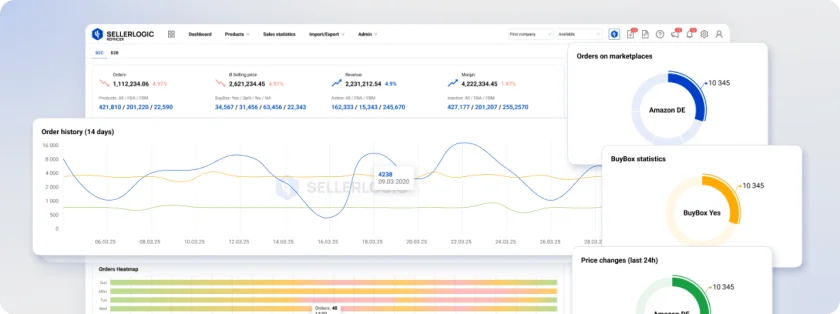
The SELLERLOGIC Repricer is built to handle the complexities of the Amazon marketplace. Instead of a "race to the bottom" strategy, it uses sophisticated algorithms to find the optimal price that secures the Featured Offer while protecting your bottom line.
The SELLERLOGIC Repricer provides several key functions for modern sellers:
- Buy Box Optimization: The tool targets the Featured Offer threshold, aiming for the highest possible price that still wins the position.
- Competitor-Price and Market-Position Reactions: It monitors the marketplace and adjusts your prices in response to competitor movements.
- Supported Sales-Based Strategies: You can set strategies, such as Push or Daily Push, that adjust pricing based on defined unit-sales targets.
- Configured Min/Max Limits: You maintain full control over your pricing boundaries, ensuring the tool never prices outside of your profitable range.
In a marketplace where delivery promises and availability are crucial, having a tool that reacts to competitor pricing and market positions is essential. By combining effective inbound strategy with sophisticated repricing, you can maintain a strong presence in the Featured Offer regardless of where the customer is located.
Our products