Which metrics and offers influence your Buy Box chances


How is it that some offers are visible on Amazon while others do not appear in the Amazon Buy Box? The criteria for winning the little yellow button are the best-kept secret of the online giant, and qualifying for the Buy Box is not without its challenges. The Amazon algorithm decides based on certain rules which sellers are ideally suited for the field.
Because on Amazon, there are two types of sellers – Amazon itself and third-party sellers of merchandise and private label. When multiple sellers sell the same merchandise, a competition arises for the field on the right side of the product detail page, where customers can add an item to their cart or purchase it directly using a yellow button.
Typically, there is only one Buy Box on each Amazon product detail page, and all sellers offering this merchandise share this space. However, only the best of the best win the shopping cart field. How? You will find out here.
What is the Amazon Buy Box?
Anyone who wants to become a seller on Amazon must know it: the Amazon Buy Box, in German shopping cart field, sometimes also written as Buy Box or Buybox. The visually highlighted box on the product detail pages includes not only the price but also the yellow button labeled “Add to Cart.” Next to it is also the “Buy Now” field, through which customers can go directly to checkout. Essentially, it is the Amazon equivalent of the shopping cart in other online stores.
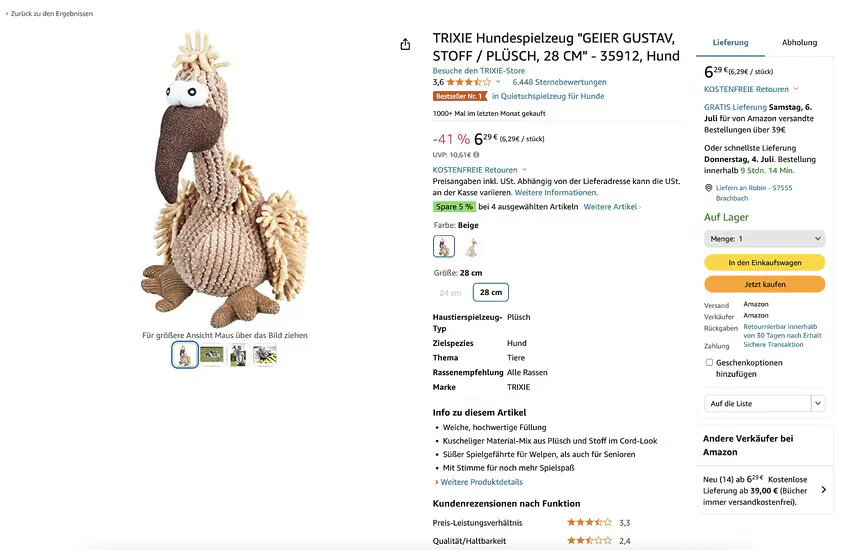
Since most customers do not take the time to check all offers for an item but simply click on the Buy Box to make a purchase, around 90% of all sales of a product go through the yellow button. The Buy Box thus guarantees a high sales rate for the items of the respective seller and optimizes sales figures on the marketplace.
Up to 90% of all sales occur in the Buy Box.
With this in mind, placement in the small yellow field on the product detail page is as coveted as ever and is the primary goal for online sellers on Amazon to remain competitive. But what criteria influence the awarding of the Buy Box?
The empty chair
An Amazon myth states that Jeff Bezos always brings an empty chair to his meetings. He places it at the conference table like any other chair. However, throughout the entire meeting, no one sits in it.
The chair serves as a symbol – it symbolizes the Amazon customer. The empty chair is meant to represent the customer sitting at the table, reminding all participants that all decisions are made for the benefit of the customer.
Whether this myth is true or not, one can easily imagine that the empty chair was also present during the discussion about the Buy Box algorithm. Thus, it is no wonder that only the offers in the Buy Box promise the best customer experience.
If you want to win the Amazon Buy Box, you must primarily provide excellent customer service.
An overview of all important Buy Box criteria
The following overview separates published requirements for seller performance from listing factors. Meeting an account threshold does not guarantee a Buy Box win.
| Metric / Factor | Classification |
|---|---|
| Order Defect Rate | Below 1%; includes negative seller feedback, relevant A-to-Z Guarantee claims, and credit card chargebacks. |
| Pre-fulfilment Cancel Rate | Below 2.5% for self-shipped orders; observation period seven days. |
| Late Shipment Rate | Below 4% for self-shipped orders; this pertains to the shipping confirmation, not the delivery. |
| Valid Tracking Rate | At least 95% for the shipments covered by the respective policy; note exceptions. |
| Final price and delivery offer | Assess competitive total price and reliable delivery; there is no general ideal value for every product. |
| Availability | Ensure inventory and availability; no general minimum quantity for the Buy Box. |
| Customer Service and Invoices | Process inquiries, returns, and invoices in accordance with applicable requirements. |
Amazon does not publish a complete weighting of all Featured Offer factors.
1. Shipping method
To guarantee fast delivery, the processes surrounding the sale must be coordinated. Such optimization takes a lot of time and money. As an online seller, you know the work involved in the processes surrounding the order:
- Customer service
- Storage
- Inventory management
- Item assembly
- Packaging
- Shipping
- and more
The faster these processes run and shipping can start, the more satisfied the customer is, and thus your chances of winning the yellow field increase.
Amazon has significantly advanced the optimization of internal processes for order fulfillment and has been offering its own solution for several years with its “Fulfillment by Amazon” (FBA) program.
But what does FBA have to do with the Buy Box?
To do this, let’s compare the different shipping options at Amazon.
Fulfillment by Amazon (FBA)
The merchant ships ready-to-deliver goods to Amazon. Amazon provides storage capacities, takes care of packaging, shipping, and customer service. The items are marked as Prime offers and with “Shipped by Amazon.” With Fulfillment by Amazon, the merchant has access to the most affluent customer group on Amazon, the Prime customers.
Shipped by Merchant (Fulfillment by Merchant – FBM)
The merchant takes care of all processes related to shipping and customer service. Offers are not marked as Prime offers. Since the entire fulfillment is in the seller’s hands, storage space, manpower, technology, etc. must be organized by themselves. Amazon acts here merely as a platform for offering products.
Prime by Seller / Seller Fulfilled Prime
In this shipping program, the merchant’s goods are marked as Prime offers. Although Amazon selects the shipping service provider itself, it provides Prime shipping labels. The fulfillment and customer service are also completely managed by the merchants. This shipping method is particularly suitable for online merchants who offer high-quality products, products with seasonal or unpredictable demand, fragile or bulky goods. However, the program is only accessible by invitation from Amazon and after extensive quality tests.
As you can see from the table above, the Amazon algorithm prefers products with Prime status – pure FBM offers often fall short in the battle for the Buy Box. This is intended to keep customer satisfaction at a high level.
- Prime shipping is free. This encourages the buyer to click the purchase button.
- The processes established by Prime are usually significantly faster than those of a merchant who does not offer Prime shipping. The goods typically leave the warehouse within a few hours and are on their way to the satisfied customer.
- FBA and Seller Fulfilled Prime are treated equally by the Amazon algorithm – they essentially offer similar service.
And now?
Minimum requirement and ideal value for the Buy Box
The minimum requirement for Buy Box qualification is shipping via FBM. To win the Buy Box, you should rely on FBA or Seller Fulfilled Prime.
Tip: Weigh all the pros and cons of each shipping method
A fast delivery and the best customer service are the most important prerequisites for winning the Buy Box, which are completely covered by Fulfillment by Amazon. Nevertheless, FBA is not suitable for all product groups. Therefore, weigh all the pros and cons of the shipping methods on Amazon and decide for yourself which shipping is best suited for which items. A competitive analysis can also help in making a decision. If you need more information about the individual shipping methods at Amazon, you can read about it here.
2. Final price
Sellers often confuse the final price with the product price when pricing. The final price consists of the product price plus shipping costs. Amazon calculates the final price and displays the offers in the Buy Box in the corresponding order. Often, the lowest price has the highest share of the Buy Box. However, this is not only due to the price, but also to the summary of additional metrics that show which seller can provide the best buying experience.
Minimum requirement and ideal value for winning the Buy Box
According to Amazon, the price should be as low as possible. However, it is actually about the price-performance ratio. Therefore, do not try to compensate for the other metrics with the lowest price.
Tip: The lowest price does not win
If you observe the offer prices on Amazon’s marketplace, you will notice that they change constantly. This is dynamic or rule-optimized price adjustment – the selling price is automatically adjusted to the market situation or competition, possibly in connection with a specific pricing strategy. A comprehensive article on why dynamic repricing is crucial in the price battle for winning the Buy Box and how you can advance the optimization of your price, read here.
To put it briefly: With a rule adjustment in pricing – such as “My price must always be 5 cents below the lowest price” – the rule-optimized Repricer considers the competition fighting for the small yellow button and pushes your prices down. In fact, rule-based Repricer can also win the Buy Box (unless dynamic Repricer are in play), but this comes at the expense of profitability. Dynamic repricing is about first entering the Buy Box and then playing between the minimum and maximum offer price per item or product group. Here, the price is automatically adjusted to the market situation and competition. This pricing strategy leads to the optimization of your margin.
3. Shipping duration
The faster the shipping, the better the ratings, and thus the chances of success for the placement of your offers in the shopping cart field. The requirement for winning the Buy Box is therefore: The shipping duration must not exceed two days. For qualification in the Buy Box, a shipping duration of up to 14 days is sufficient, but these offers will hardly have a chance for the shopping cart field in any case.
Minimum requirement and ideal value for the Buy Box
To qualify for the Buy Box, your shipping must not take longer than 14 days. If you want to win the field for yourself, the shipping should take less than two days.
Tip: Monitor competition and choose the right shipping method
Delivery times often depend on the product category. Batteries or cosmetics are quickly packaged and shipped. In contrast, furniture or large appliances take several days to reach the customer. Monitor your competition to get an idea regarding the delivery times of certain product categories: If another seller promises delivery within two days for a similar product, that is considered a minimum requirement for you as well. However, do not stretch the delivery guarantee too far – late deliveries worsen the seller rating on Amazon, which has consequences for your scoring value and the placement of your offers in the Buy Box.
The benchmark in customer service: Seller performance
Seller performance consists of various metrics of customer service. How crucial this composite value is becomes clear from the English name: Account Health.
If the minimum requirements are not met, the seller account “suffers,” and Amazon feels compelled to restrict or even revoke the selling privileges. Thus, it is evident from the seller performance metric alone how important customer satisfaction is to Amazon. The customer service metrics included in seller performance are also the most important for determining the Buy Box.
Seller performance includes:
- Rate of order defects
- Cancellation rate before order fulfillment
- Rate of late deliveries
- Rate of valid tracking numbers
- Rate of on-time deliveries
- Dissatisfaction with returns in percent
In the following, we will take a closer look at the individual metrics of seller performance.
4. Rate of order defects
The Order Defect Rate takes into account orders with at least one relevant defect: negative seller feedback, A-to-Z Guarantee claim, or credit card chargeback as defined by Amazon. An order is not counted multiple times for multiple defects.
Order Defect Rate = Orders with at least one relevant defect ÷ Considered Orders × 100.
Amazon requires a rate of less than 1%. The metric is evaluated over the 60-day period specified in Seller Central. Cancellations are not included in this formula. Meeting the threshold alone does not guarantee a Featured Offer.
5. Cancellation rate before order processing
The Pre-fulfilment Cancel Rate concerns relevant orders canceled by the seller for self-shipped offers.
Cancel Rate = considered seller cancellations ÷ considered orders × 100.
Amazon requires a rate below 2.5% over a period of seven days. Keep inventory data up to date and offer only quantities that you can actually deliver. The threshold is a requirement for seller performance, not a guarantee for the Buy Box.
6. Late Shipment Rate
The Late Shipment Rate measures for self-shipped orders whether the shipping confirmation was sent after the expected shipping date. It does not measure when the shipment arrives at the customer.
Late Shipment Rate = Orders with late shipping confirmation ÷ Considered Orders × 100.
Amazon requires a rate below 4%; Seller Central considers periods of ten and thirty days. Confirm the actual shipment in a timely manner and keep processing times realistic.
7. Rate of valid tracking numbers
The Valid Tracking Rate evaluates tracking for shipments covered by Amazon’s policy. For these shipments, Amazon requires at least 95%. The shipments included depend, among other factors, on the marketplace, shipping method, and applicable exceptions.
Valid Tracking Rate = shipments with valid tracking ÷ all considered shipments × 100.
Use supported shipping service providers and correct tracking data. A shortfall may lead to the deactivation of affected listings.
8. Rate of on-time deliveries
Timely delivery should be distinguished from timely shipping confirmation. Evaluate whether shipments arrive within the time window promised to customers. The requirements applicable to the account depend on the marketplace and shipping program. Use realistic delivery promises and analyze delays by shipping service provider and shipping method. A general value of 95% is not a universal Buy Box rule.
9. Handling Returns Reliably
Process returns transparently and within the applicable return and refund processes. Recurring reasons such as incorrect product descriptions, damaged goods, or long processing times indicate specific areas for improvement. Document the causes and address recurring issues in listings, packaging, or fulfilment.
Additional metrics for determining the Buy Box winner on Amazon
With the shipping method, total price, shipping duration, and seller performance, we have covered the most important criteria for winning the Amazon BuyBox. You should also take the following criteria to heart, even though they do not have as significant an impact.
10. Average seller rating and number of seller ratings
First of all, we should clarify that seller rating and product rating are two different things. Product ratings reflect buyers’ experiences with a product. However, seller feedback consists of statements about the seller’s performance. This involves customer contact, shipping speed, item description, etc. – all points that the seller can influence. The seller rating is given by the customer after the purchase. On the “Leave Seller Feedback” page, the customer can express their satisfaction with the seller’s performance through a simple star rating. Additionally, the punctuality of delivery, the accuracy of the product description, and the performance in customer contact (if applicable) are also assessed. Finally, the customer can leave a comment if desired, which will be displayed on the seller’s page.
The average seller rating is calculated as the average of ALL seller ratings, with newer ratings carrying more weight than older ones. So, if you have received more negative ratings recently, these will not be easily offset by older positive ratings.
Ideal value for Buy Box
The seller ratings do have an impact on the BuyBox profit. However, there is no specific value that must be achieved. Instead, it should be your endeavor to keep the value as high as possible.
For this reason, the total number of ratings is also important. Because with a low number of ratings, a few negative ones can pull the entire rating profile down. Therefore, you should collect as many ratings as possible.
Tip: 3 Ways for More Positive Reviews
#1 Honesty and High Quality Set Standards
If you are honest with your customers, your product descriptions match the facts, and your product is of high quality, you are more likely to receive positive reviews.
#2 Go the Extra Mile
Bad experiences often leave a very strong impression – or very good experiences. Therefore, you should do everything to make the experience for your customers as pleasant as possible. Take advantage of reciprocity. With small gifts and a personalized message wishing them much joy with the product, you can create the feeling in the customer that they “owe” you. You have given them more than they “paid” for. They now want to give back, hopefully in the form of a good review.
#3 Learn from Your Bad Reviews
Regularly review your ratings and proactively engage in dialogue with your customers who have rated you poorly. Even if some criticism may seem unjustified, critics still provide the best opportunities for self-improvement. Utilize the potential, and your next customer will thank you for it.
11. Response time
Process buyer inquiries through the designated communication channels and within the deadlines applicable to your account. Prioritize questions regarding open orders, delivery issues, and returns. Establish responsibilities and delegations to ensure that no relevant inquiries are left unattended, even during higher order volumes.
12. Inventory
If your inventory is low or the purchase cannot be completed in a timely manner due to delivery difficulties, Amazon’s requirements are not met. The consequences are quite simple – purchases go to your competitor, and you lose the BuyBox. If sales are even canceled due to low inventory, your cancellation rate before order fulfillment increases, and the buyer is likely to give you negative feedback. Both of these lower the seller rating and thus also the chances of placement in the BuyBox.
Tip: Inventory Management is Key!
How can you counteract this? Very important: automatic inventory reconciliation. With your own warehouse and multiple sales channels, it is essential that the inventory is managed centrally in one place and automatically updated across all channels. This prevents overselling. Also, pay attention to purchasing trends and regularly check the inventory of the most popular items in your product range.
13. Targeted Improvement of Customer Service
Check recurring complaints and unresolved inquiries to address issues in the listing, shipping, or service. Use the currently available reports and account notifications for this purpose. Document the solution and adjust processes if the same problems occur with multiple orders.
Tip: 3 Ways to Avoid Dissatisfaction
#1 Refine the Perfect Response
The written word has its pros and cons. The advantages are obvious – you have enough time to think about your customer’s concern and write a message that answers all questions. Additionally, you can use this as a template for similar inquiries. The downside: The reader has a lot of room for interpretation. It is therefore your task to keep the messages to your customers simple while equipping them with all necessary information. Read your own responses carefully. Are you using clear words? Are you describing all necessary steps to resolve the issue? When the customer knows what to expect next, they feel more secure and wait before impatiently sending the next message or leaving negative feedback.
#2 Personalize Your Response
Every customer is unique, and they should feel that way. Address them by name and sign off with yours as well. Engage with the customer history so they know their concern is important and taken seriously. If you are also operating internationally with your products, add the finishing touch by informing them about customs and return policies, exchange rates, and delivery times.
#3 Act Proactively
You know the recurring issues with an order or when using your items. Act proactively and answer all questions about your products right on the detail page – this minimizes your support volume. Give the buyer confidence in selecting your items by providing all necessary information about the product.
14. Rate of Invoice Deficiencies
The Invoice Defect Rate captures Amazon Business orders for which an invoice or required receipt was not uploaded within one business day after shipping confirmation.
Invoice Defect Rate = affected Amazon Business orders ÷ considered Amazon Business orders × 100.
Amazon requires a rate of under 5% for the German marketplace. It is calculated based on a seven-day order period that begins two weeks prior. Upload the documents through the designated processes; a message to the buyer does not replace the invoice upload. A persistent exceedance can lead to account deactivation. Compliance alone does not guarantee a Buy Box win.
Conclusion: High Requirements for Winning Buy Box
Placement in the BuyBox on the Amazon product page has a significant advantage – your items are prominently positioned, which greatly boosts sales on the marketplace. To win the BuyBox, the lowest selling price is not enough, as various factors come into play. Many of these factors have a common denominator – providing the customer with a perfect shopping experience.
Amazon prides itself on the perfect customer journey – high demands in terms of customer service are therefore completely understandable and, ultimately, also contemporary. The more professionalism you display, the higher the likelihood that you will either be the sole Buy Box winner with your items or compete for a larger share of the coveted placement.
Frequently Asked Questions
The Amazon BuyBox refers to the visually highlighted box with two yellow and orange buttons that is displayed on every product page. These buttons provide customers with the easiest way to add an item to their cart or buy it directly. Many products are offered by multiple sellers, which is why the algorithm decides which specific offer is placed in the BuyBox based on various criteria. Since around 90% of all customers shop through the BuyBox and do not consult the list of all other offers, the shopping cart field, as it is called in German, is highly sought after.
For some time now, there has been a second BuyBox on certain product pages. Amazon introduced this measure in response to antitrust difficulties. However, the second BuyBox seems to be used rather rarely.
In the past, the algorithm could often be tricked with a very low final price. Nowadays, many different aspects are taken into account in the allocation of the BuyBox, so that the price is an important but by no means the only criterion. Nowadays, poor seller performance can no longer be compensated for by a dumping price. Moreover, you would ruin your margin. Instead, focus on good performance and dynamic repricing.
Eligibility depends on various factors, including the account, the product, and the specific offer. Check the Featured Offer status in Seller Central. A blanket waiting period of 90 days does not constitute a general commitment for every offer.
First of all: Don’t panic. The BuyBox often changes hands, especially for competitive products. So it could very well be that your offer will soon hold the yellow button again. If that is not the case, investigate the causes by looking at your seller KPIs. Is any value showing up negatively? Were you perhaps displaced by a Prime offer? Maybe you are simply not offering the optimal price (not the same as the lowest price). Then you should definitely get into dynamic price optimization, for example with the SELLERLOGIC Repricer, specifically for Amazon.
Image credits in the order of the images: © Lukasz – stock.adobe.com
Our products